
Adrian Fernandez
Adrian Fernandez is an architectural worker, sessional academic, and PhD student in Architecture at the University of Pennsylvania. His practice is focused on unpacking how architectural tectonics and strategies are used as a way of dictating and oppressing flows and organisations. One of these speculative projects - ‘Binary Oppositions’ was awarded the Drawing Architecture prize from MADA for the most accomplished drawings of architecture, and another was exhibited as part of Melbourne Design Week. Some places that have allowed him to expand on these ideas in talks and panel discussions include Blindside Gallery, MPavilion, Testing Grounds, Black Spark Cultural Centre and PROCESS, where he was a co-curator of their monthly talk series.
The Gaze of Infrastructure
Single channel video, 2025.
Not for sale.
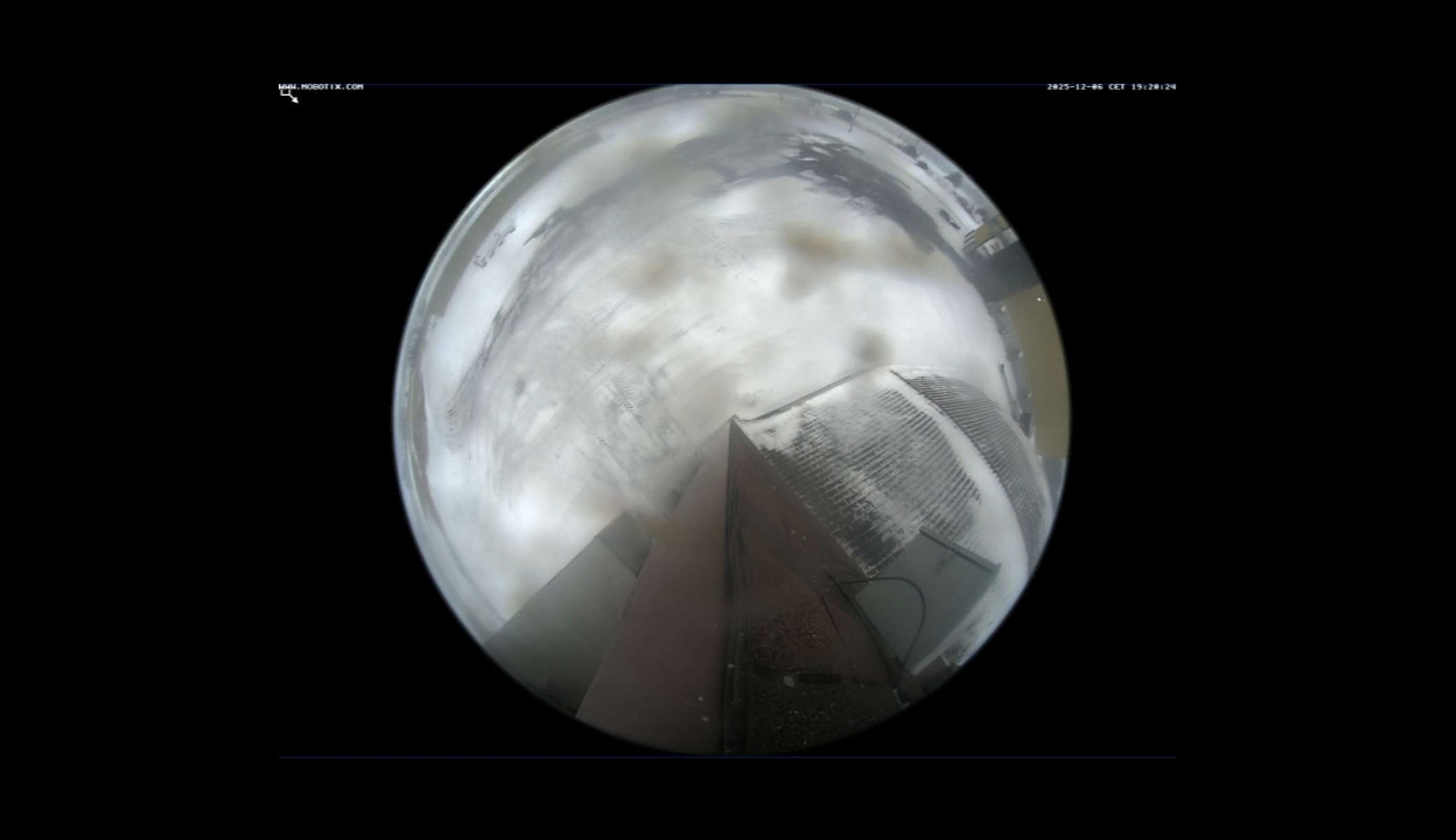
The Gaze of Infrastructure is a short film composed entirely of public surveillance camera footage. The images were not recorded by me and were never intended to function as cinema. They were produced by automated systems designed for monitoring, not storytelling. By extracting and editing this material, I shift it from its original context of control into a new context of reflection.
The project began with a simple question: what does it mean to look at the world through a surveillance lens? Surveillance cameras record continuously and without intention. They do not frame scenes with care or narrative purpose. Yet once I select, arrange, and edit this footage, I introduce authorship. I impose rhythm, emphasis, and structure onto images that were originally indifferent.
This creates a tension at the core of the work. The film sits between documentation and construction. It is neither fully objective nor fully authored in the traditional sense. It uses material that feels out of place in a gallery setting, low-resolution, functional, infrastructural—and presents it as something to be looked at slowly.
The Gaze of Infrastructure repurposes a system of surveillance into a site of aesthetic inquiry. The misalignment is subtle but deliberate: images meant for oversight become images for contemplation. The film asks viewers to consider how visibility is structured, who controls the gaze, and what changes when infrastructure becomes image.