
Maïténa Etchebarne
Maïténa Etchebarne is a French artist and early childhood educator based in Melbourne. She graduated in 2025 with a Licenciatura in Painting from the Faculty of Fine Arts, University of Lisbon. Her work moves between painting and photography, exploring the fragile line between image and intimacy. Themes of memory, secrecy, and intergenerational storytelling run through her practice, most recently in her solo exhibition The Secrets Women Hold at the Queen Victoria Women’s Centre. Recently, she has begun to incite the public to impact and co-create her works — a direction she continues to explore through participatory pieces and family workshops.
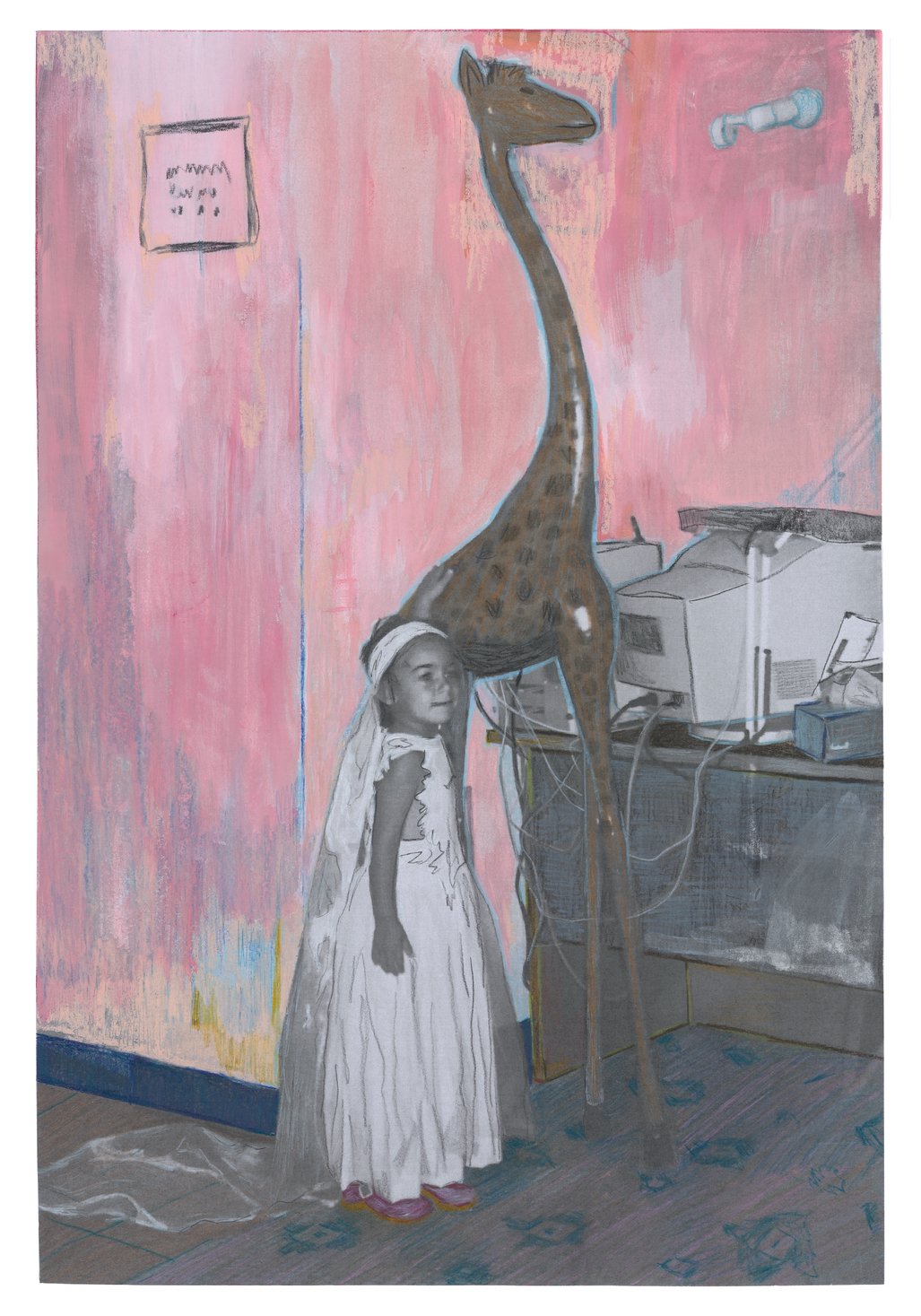
Growing up with the internet didn’t spare me
Gouache, pencil, and oil pastel on printed photocopy on paper, 2025.
36 x 24 cm
original not for sale / print for sale possible
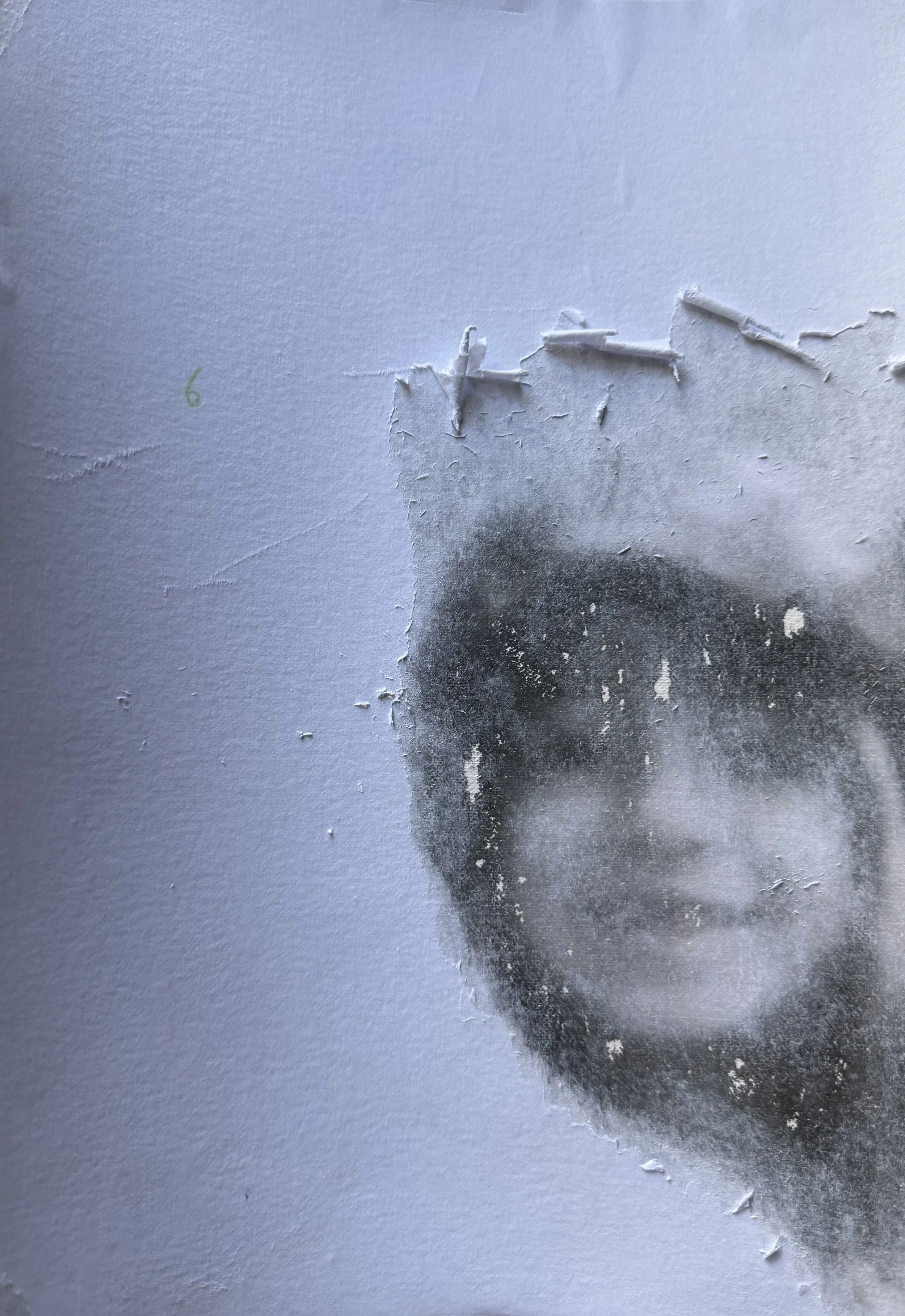
Face study for “My coming of age came early”
Manual print transfer of digital altered photograph on paper, 2025.
29.7 x 21 cm
original not for sale / print for sale possible
In my practice, I explore memory, secrecy, and transgenerational trauma through the reappropriation of family photographs. Returning to images from my childhood, I revisit moments captured before I understood the forces already shaping me. Through painting and manual print transfer, I reclaim these archives, allowing memory, identity, and authorship to shift.
Where I once used colour and layered mixed media to intervene in fading memories, I now work primarily in black ink through manual transfer. What I considered a delicate process revealed itself as both controlled and uncontrollable — an act of destruction. The image survives through rupture. In that rupture, I find liberation.
There is often an elephant in the room — something visible yet unspoken. In one work, it becomes a giraffe: a child dressed as a bride stands beside it, waiting. Through this image, I question how my understanding of love and relationships was shaped by romantic fantasy, inherited expectations, and the digital environment in which I grew up.
Growing up alongside the internet created the illusion that digital literacy meant safety. It did not. Early exposure to hyper-sexualised imagery and online dynamics shaped my understanding of love and validation before I had the language to question them. I learned to occupy the gaze before I understood its weight.
By reworking these photographs, I reclaim authorship over how these experiences live in the present. The work becomes an act of confrontation and release — refusing to let the past remain invisible or unconsciously dictate the present.